Family Travel
The Caribbean Getaway That Makes Family Travel Feel Easy
Miami Kids Magazine, October 2026
Education
By Neidy Gomez, Hive of Thinkrs
October 2026
Neidy Gomez of Hive of Thinkrs on why game-based learning builds the executive-function skills — planning, focus, adapting — that predict long-term academic success, and simple ways to try it at home.
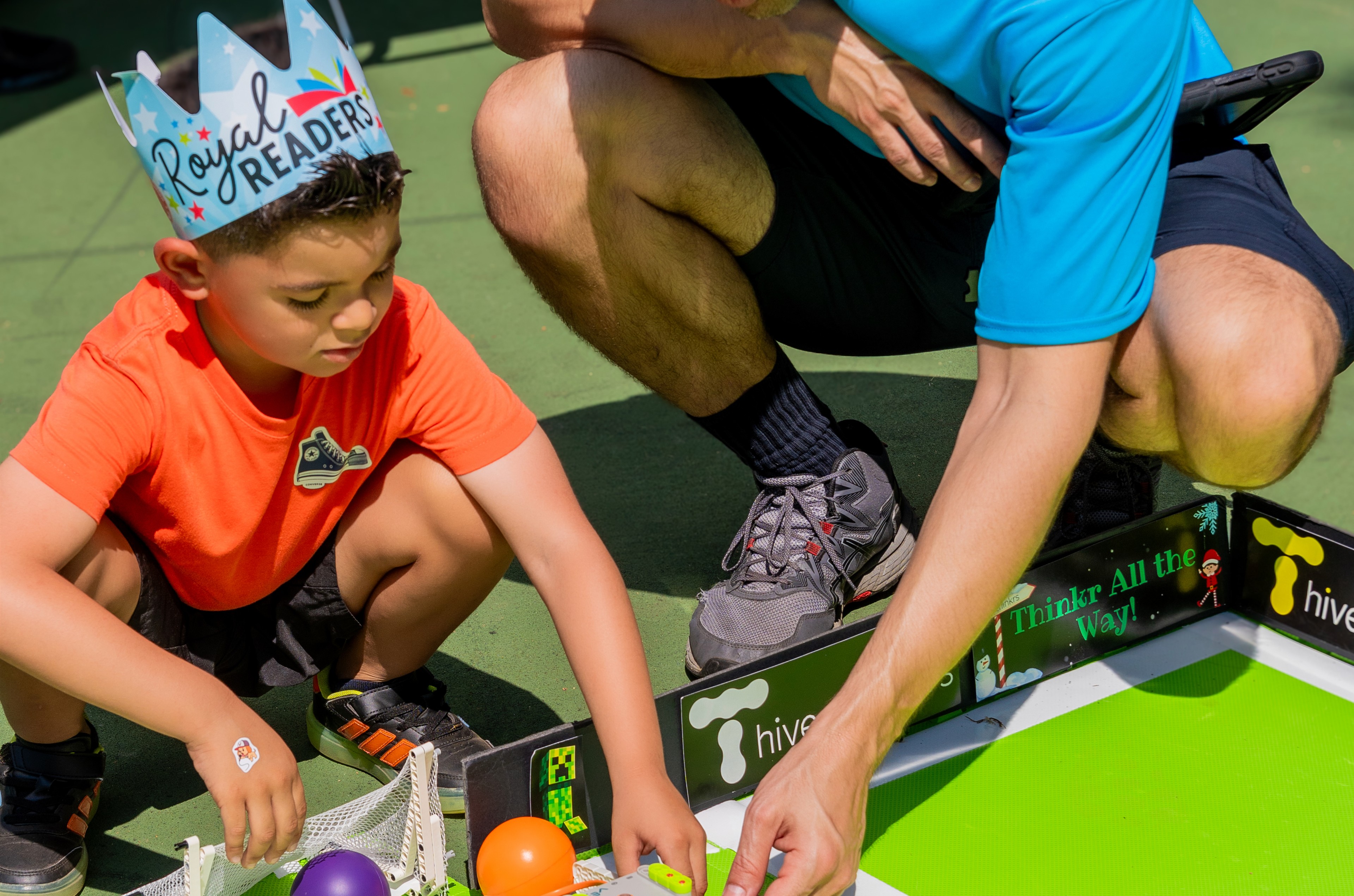
Many parents still picture “real learning” as quiet desks, worksheets, and memorization. But children often learn more deeply when they actively participate, experiment, and solve problems. Play is not a break from learning; it is one of the brain's most effective ways to build understanding.
When children build a bridge, code a game, or design a robot to complete a challenge, they are strengthening executive-function skills: planning, focusing attention, holding information in mind, controlling impulses, and adapting when a strategy fails. These abilities are among the strongest predictors of long-term academic success and are developed through practice, not memorization.
Game-based learning is powerful because it gives children a reason to persist. Instead of completing a worksheet simply because they must, they are trying to solve a problem, improve a design, or reach a goal. Feedback is immediate, and mistakes become information: the tower fell, the code failed, or the game did not work. Children can adjust and try again without treating every error like an academic catastrophe. Albert Einstein used to say: “Play is the highest form of research”.
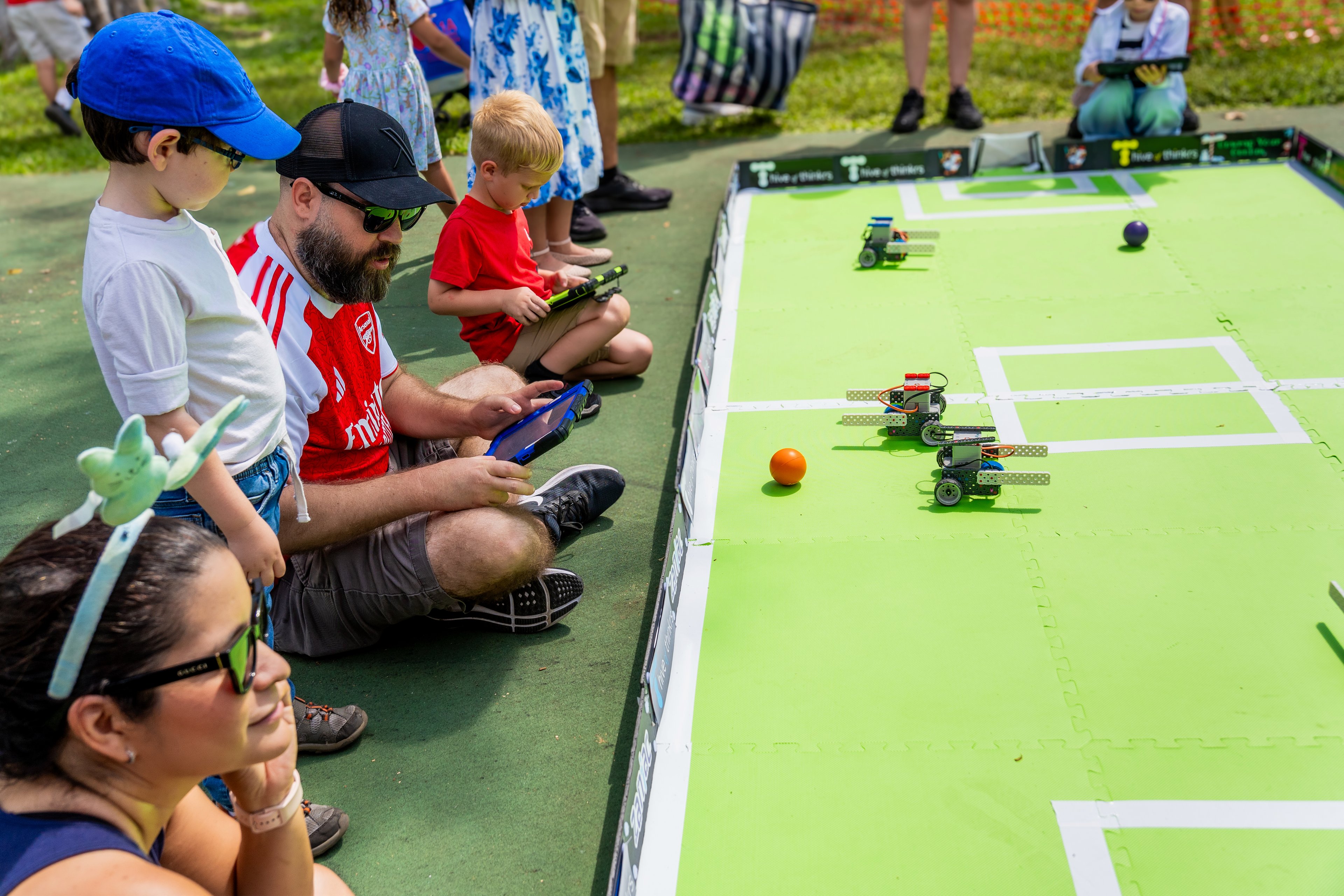
Even many of history's greatest thinkers recognized that breakthroughs rarely happen by staring at a problem longer. Mathematician Henri Poincaré described solving complex problems while taking breaks, and Albert Einstein often played the violin to work through difficult ideas. Today, neuroscience helps explain why. During game oriented hands-on activities and moments of relaxed reflection, the brain continues making connections that support concept acquisition and problem-solving.
This does not mean traditional instruction is unnecessary. Children still need direct teaching. The strongest approach combines instruction with guided play: an adult establishes a learning goal, provides useful materials or questions, and allows the child to make decisions and test ideas. Educational game-based learning models such as the one used by Hive of Thinkrs apply this balance through hands-on challenges that require students to use academic concepts in practical situations in a way that feels like play and is FUN.
Try this at home: replace multiplication drills with a card game in which players flip two cards, multiply the numbers, and keep the round if their product is highest. Or write numbers on a beach ball; when your child catches it, have them add or multiply the numbers under their thumbs. The skill is still practiced repeatedly, but attention, movement, and strategy make the repetition more meaningful.
For more simple game-based activities families can incorporate into daily life, visit the Hive of Thinkrs blog at www.beathinkr.com/blog.
The goal is not to make learning effortless. It is to make the effort purposeful and fun enough that children remain curious, persistent, and willing to keep trying.
From the October–November 2026 issue, page 47
Read the issueFamily Travel
Miami Kids Magazine, October 2026
Special Needs
Diane Landsberg, October 2026